March 2010
I’m trying something new. I’m speaking rather than typing. Can one even call this writing? We’ll see. As many of you know, I have carpal tunnel syndrome and an additional…
March 24, 2010
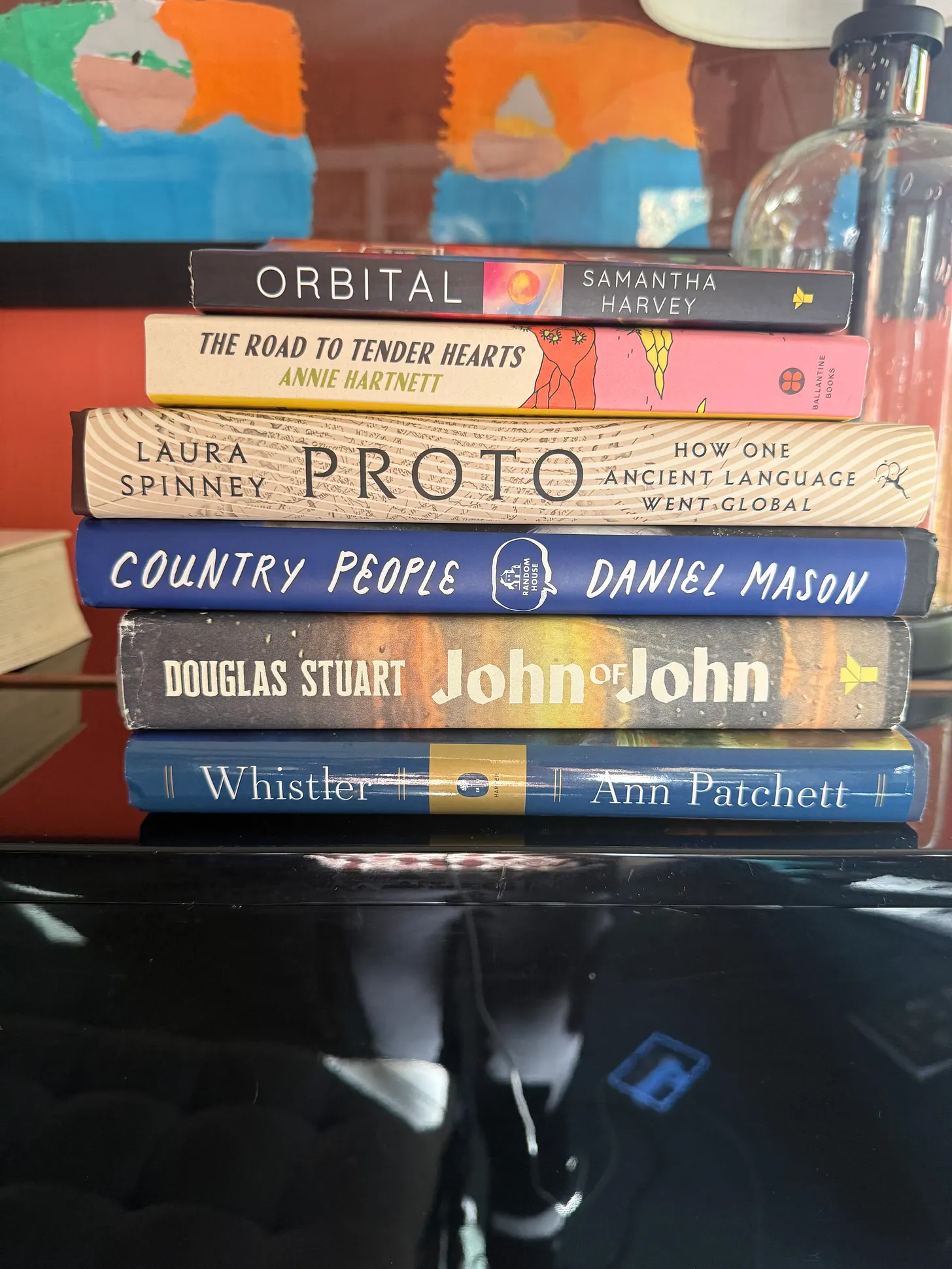
Book Reviews of John Of John, Intermezzo, Whistler, Country People and more
Dear writers (and readers),
When I was a young writer, I read Stephen King’s wonderful book On Writing. In it, he says: if one is not a dedicated reader, one won’t have the tools to be a good writer. I balked at this. I didn’t want to waste my time reading. (Other than books about being a writer). I had so little time, and I needed that time to WRITE!
So I wrote a draft of my novel. No one wanted to read it. I put it in a drawer. I didn’t read anything for seven years other than parenting books (and books on writing). Then something compelled me to read Colum McCann’s Let the Great World Spin. The passage in which the narrating character notices his father’s shoes and suits in the closet after his death grabbed my attention as an example of something I’d never done in my own writing. Here was a bit of detail, gorgeously rendered, which did several things at once: it showed us something about the father. Something about the consciousness of the narrating son. Something about the focusing power of grief.
I understood then why writers need to read. How else are we supposed to figure out this peculiar game? Writing, like any art that includes an element of fabrication, of craftsmanship, is sneakily difficult precisely because anyone who’s made it through tenth grade can write, sort of. But to differentiate the kind of workaday writing that shows a simple scene––describes the characters traveling in space from A to B, maybe delves a bit into their interiority––from the kind of writing that sticks with the reader indelibly, the kind of writing in which characters jump off the page, one must study how successful writers earned their readers. And not through books on writing or studying the habits of successful writers. (No need to drink 50 cups of coffee a day like Balzac or hang upside down, bat-style, like Dan Brown.)
It took the proverbial 10,000 hours, but I eventually learned to read as a writer. Now I have a book going at all times, mostly fiction, mostly in the genre I aspire to write in—what’s called upmarket literary. I’m sort of addicted. Or maybe not sort of. I just finished John of John by Douglas Stuart and am therefore completely unmoored and bereft. It will take a day or two for me to get over that book so I can start a new one. While I walk around depressed and aimless deciding what to read next, I’ll bask here in the memories of the books I’ve read lately. Maybe these recommendations can be useful for your holiday shopping. Links at the bottom of the newsletter.
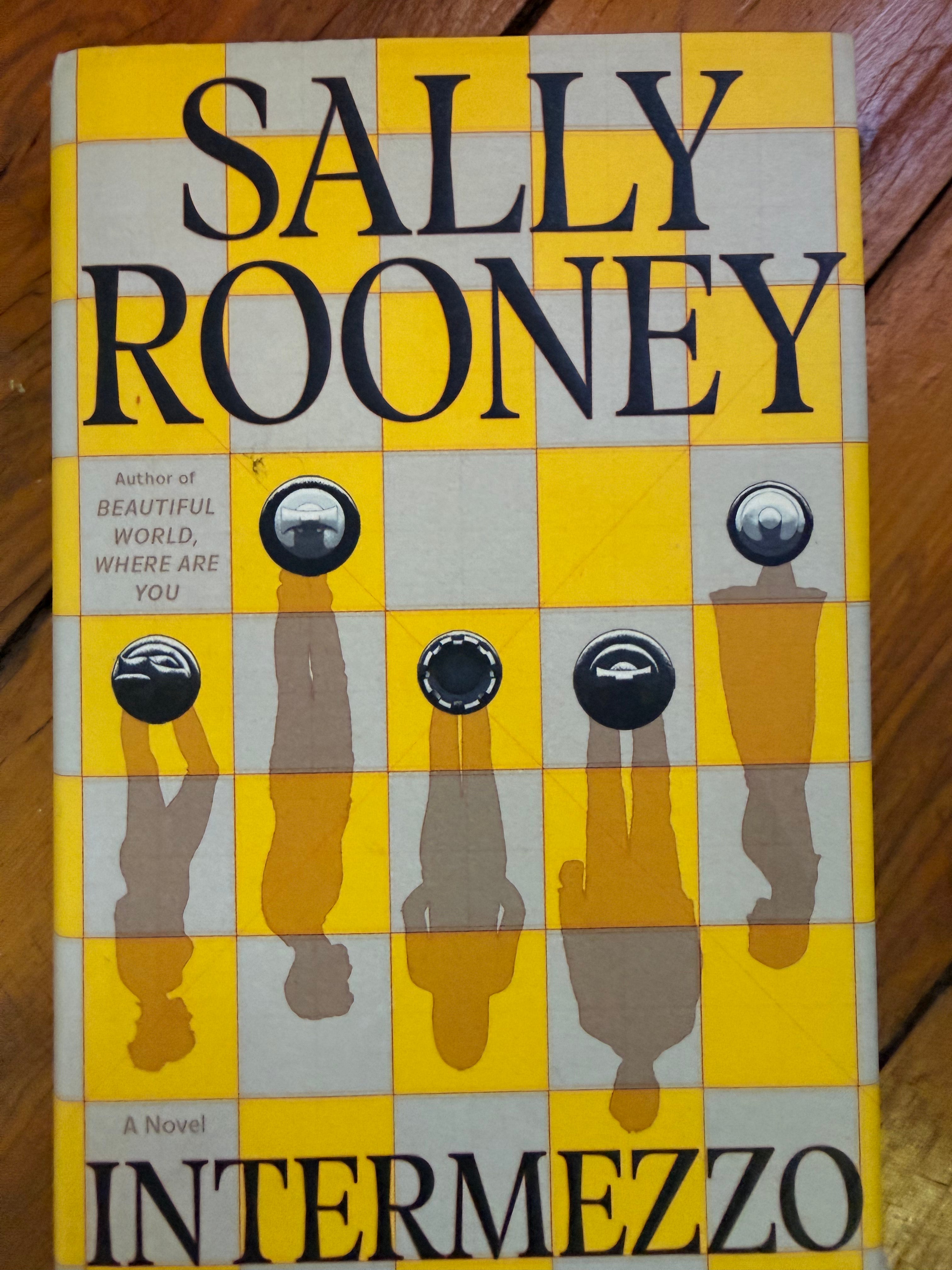
Sally Rooney’s Intermezzo. I always read whatever Sally Rooney writes, and in my opinion, she just gets better with each novel. This one is about a pair of brothers, ten years apart in age, who have just lost their father. It’s a fascinating study in terms of point of view—each brother is given a distinct narrative style. And as usual with Rooney, her primary focus is on relationships—how clearly people communicate with each other; what they say and what they can’t say, and how what they can’t say oozes into their actions and choices in generally detrimental ways.
Samantha Harvey’s Orbital. This book won the 2024 Booker Prize. It’s a lovely meditation on our planet and humanity in general. It takes place in a twenty-four hour period in the International Space Station from the points of view of the six women and men aboard. It’s notoriously difficult to write a novel that doesn’t have one main protagonist. This book succeeds, which in itself is a powerful message about the main theme: when seen from the vantage point of outer space, there are no heroes or villains. We are all in this together.
Annie Hartnett’s The Road to Tender Hearts. I’d read Jess Walter’s So Far Gone last winter. This book has some similar elements: comic tone, crotchety and eccentric old guy narrator, estranged grandchildren coming along for a road trip. Tender Hearts also has a semi-magical cat, but I got beyond that and ADORED this book. If you think it sounds like a feel-good read, you’d be right, but it’s not limited to that. The plot is delightfully twisty, full of surprises, up until the final chapter, and the book is a beautiful meditation on grief.
Hernan Diaz’s Trust. I did not like this book. Sorry, President Obama—I know you did. Weirdly, I’d just read Ian McEwan’s novel What We Can Know, and without giving anything away, I’ll just say the two books share an interesting structural element. As with McEwan’s novel, I preferred the earlier parts and disliked the ending. Trust is a story told in four different ways, a kind of literary mystery. That was fun. But the final piece of the puzzle was neither satisfying nor artistically interesting to me.
Heather Abel’s The Emilys. I just wanted to live in Heather’s gorgeous sentences forever. She writes about a Northampton or Northampton-adjacent town in the near future and a mysterious disease that’s affecting certain people who become known as the Emilys (after Emily Dickinson, the reclusive poet) because the symptoms keep the afflicted apart from their peers, literally in the dark. The characters are real and rich and earthy and fascinating, and the mystery kept me turning pages. I especially loved the honesty with which Eve, the main character, navigates motherhood and how difficult it is to be a female artist and simultaneously try to raise children.
Proto, by Laura Spinney. Sometimes I need a break from fiction and also from the terrible news of the world, and inevitably I turn to linguistics, which, via its cerebralness, numbs me out from having to feel things. This book was an absolute feast of well-told history, and it was so interesting and dense I will probably read it again, the next time the world begins to close in on me.
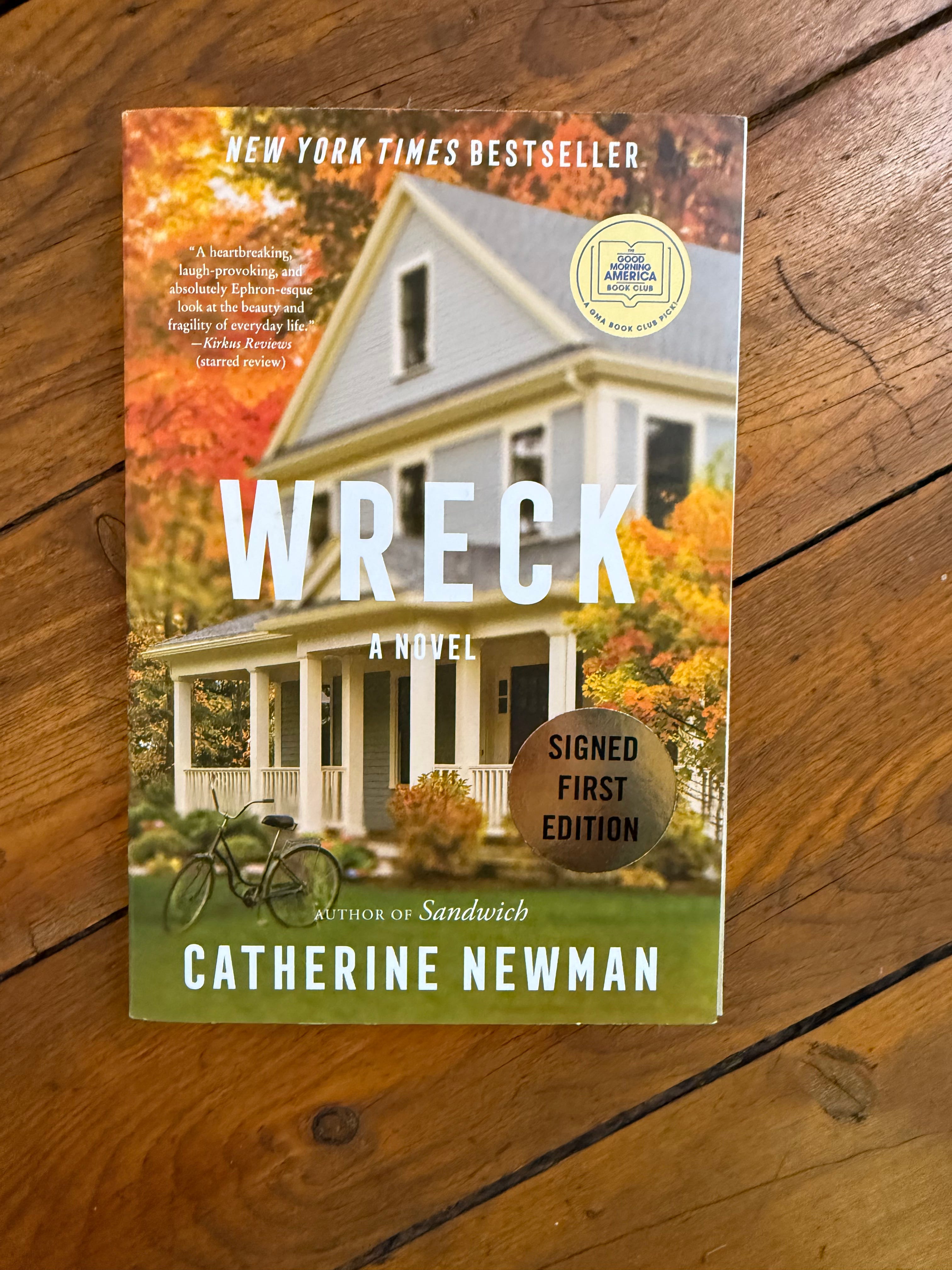
Wreck, Catherine Newman. This is a kind of sequel to her previous novel Sandwich, about a character named Rocky, freelance writer and a married mother of two grown kids. She is delightfully neurotic and hilarious, as are all her family members, especially her aging father who lives with the family. Pioneer Valley dwellers likely know Catherine’s work from her hugely popular parenting blog Ben + Birdy and her articles for Real Simple. She’s the actual best. Like Heather Abel’s book, this one concerns a mysterious disease, but in this case, it’s Rocky’s own. I especially appreciated the way she ties a local tragedy to a personal one, drawing the threads of one into the other until what the reader thought was a tangential event becomes central by the story’s end.
Whistler, Ann Patchett. I will read everything Ann Patchett writes. This one I feel especially crazy about, and as with The Emilys, I didn’t want it ever to end. I wanted to stay with the narrator Daphne and her delightful step-father Chip forever. Patchett’s novels are so solidly crafted, and she is such an accomplished storyteller that I always feel completely trusting of the directions in which the narrative takes me. And I’m always surprised at just how well she writes about love, creating such believable characters with such strong, palpable feelings. Patchett has said of Whistler that she’d actually been writing an entirely different book for several years, and then realized that it was fatally flawed. She decided to start over with a whole other set of characters. But I learned from reading interviews that the central tragedy of the book—which takes place in a kind of story-within-a story—was, at one time, a major part of that abandoned novel.
Country People, Daniel Mason. I read North Woods last year, my first Mason book, and I was hooked. I think maybe I liked Country People even more, though it’s not quite as ingenious. It reads a bit like a Russian comic novel. The entire book could be taken as a light domestic comedy, but its theme is about what lives below—literally—our conscious understanding of the world. I laughed out loud a lot while reading this. I rooted for this entire family.
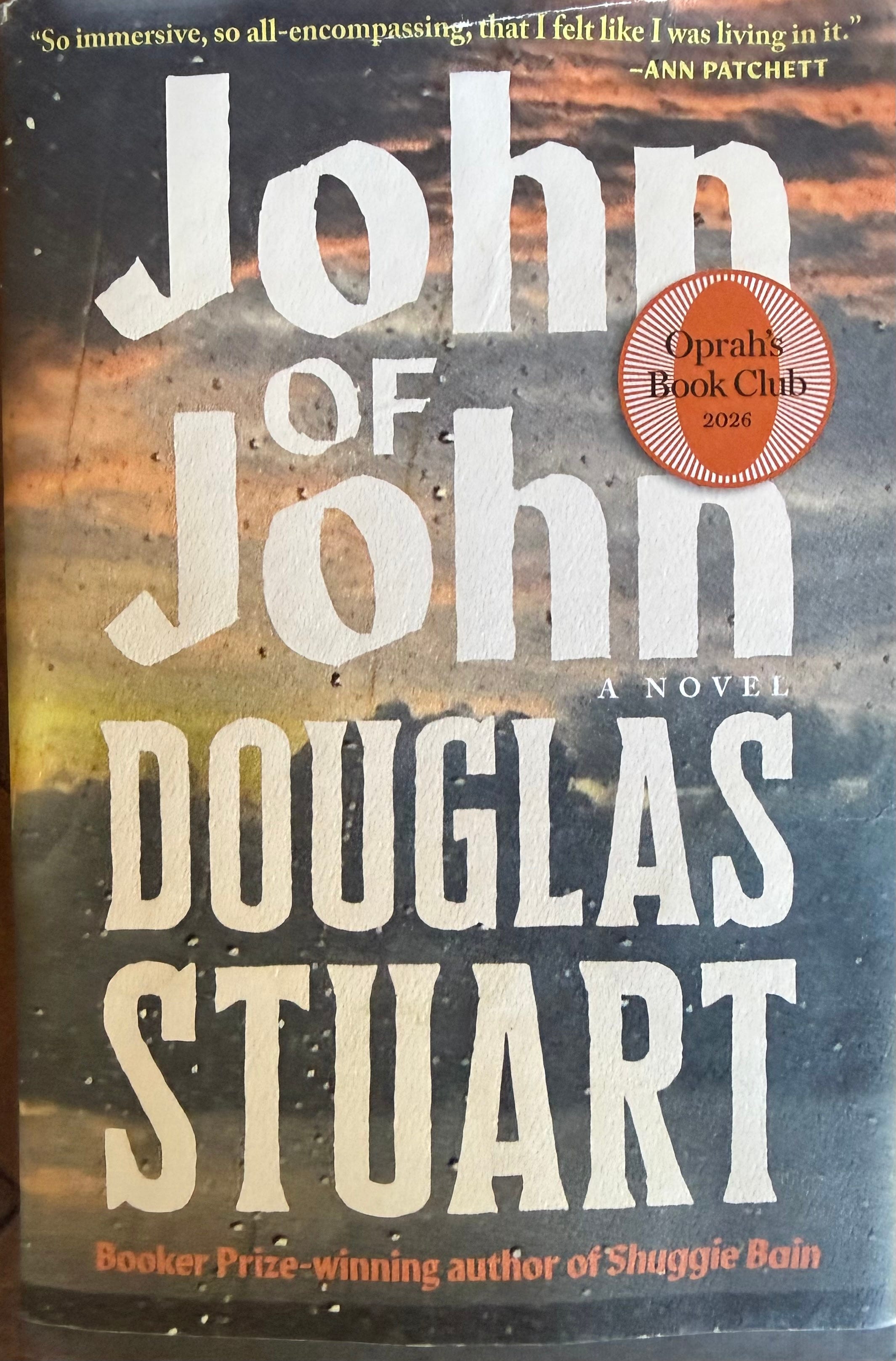
John of John, Douglas Stuart. I’m a sucker for any book about any British Isle, and this one takes place on a tiny speck of one: the Isle of Lewis and Harris, in the outer Hebrides. Twenty-two-year-old Cal, a failed art student, has come home from Glasgow after his father, a deacon in the staunchly conservative Free Presbyterian church and a tightly closeted homosexual, tells him that his maternal grandmother Ella has taken sick. Cal, who has been living openly as a gay man, reluctantly returns, only to find that Ella––who is maybe one of the very best characters ever created––seems perfectly fine. This is only the first instance of blatant manipulation between these three unhappy and hopelessly entwined family members. We get the story from each of their perspectives, seeing what the other characters cannot—their heartbreaking secrets, each of which, if shared with the others, would set them all free.
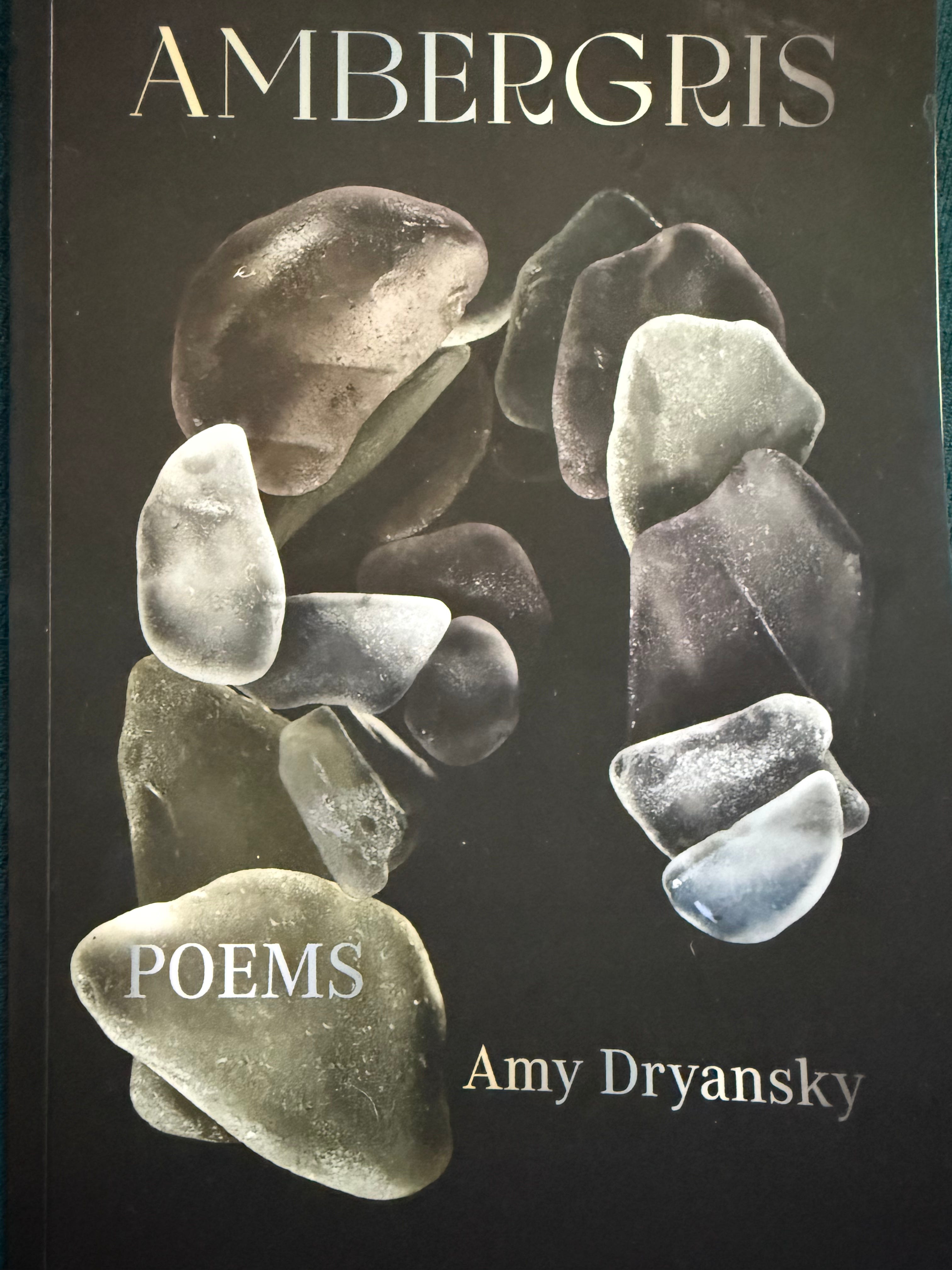
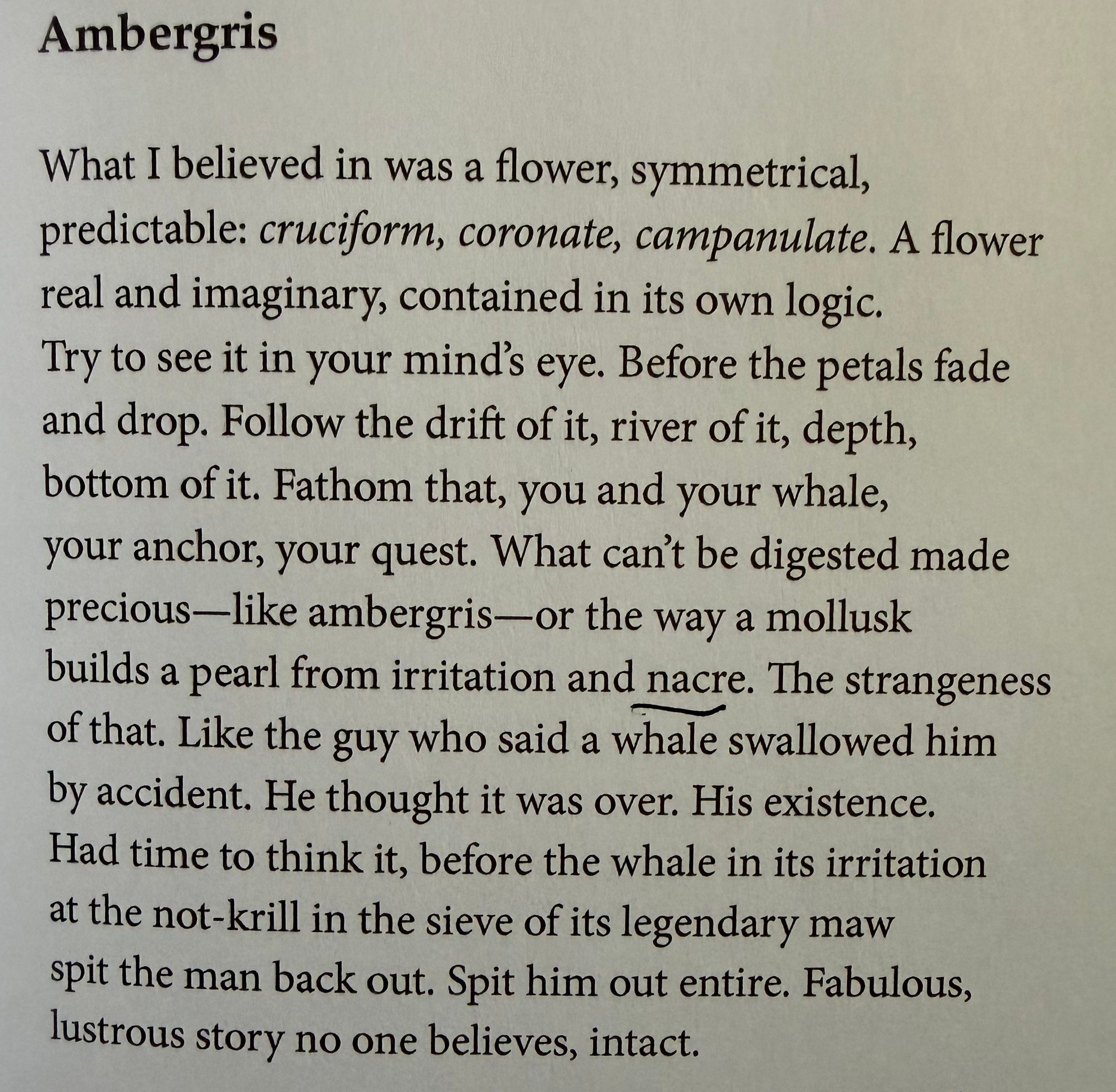
Ambergris, Amy Dryansky. Every single poem in this collection is a gem. I was fortunate to go to her reading in Northampton, and there were audible gasps from the audience after each poem was read. The title poem, “Ambergris,” takes as its inspiration a real life Jonah-and-the-Whale story of a lobsterman off the coast of Provincetown, MA who was swallowed and then spit out by a whale. Dryansky has a gift for surprising the reader, often in the final line of her poems.
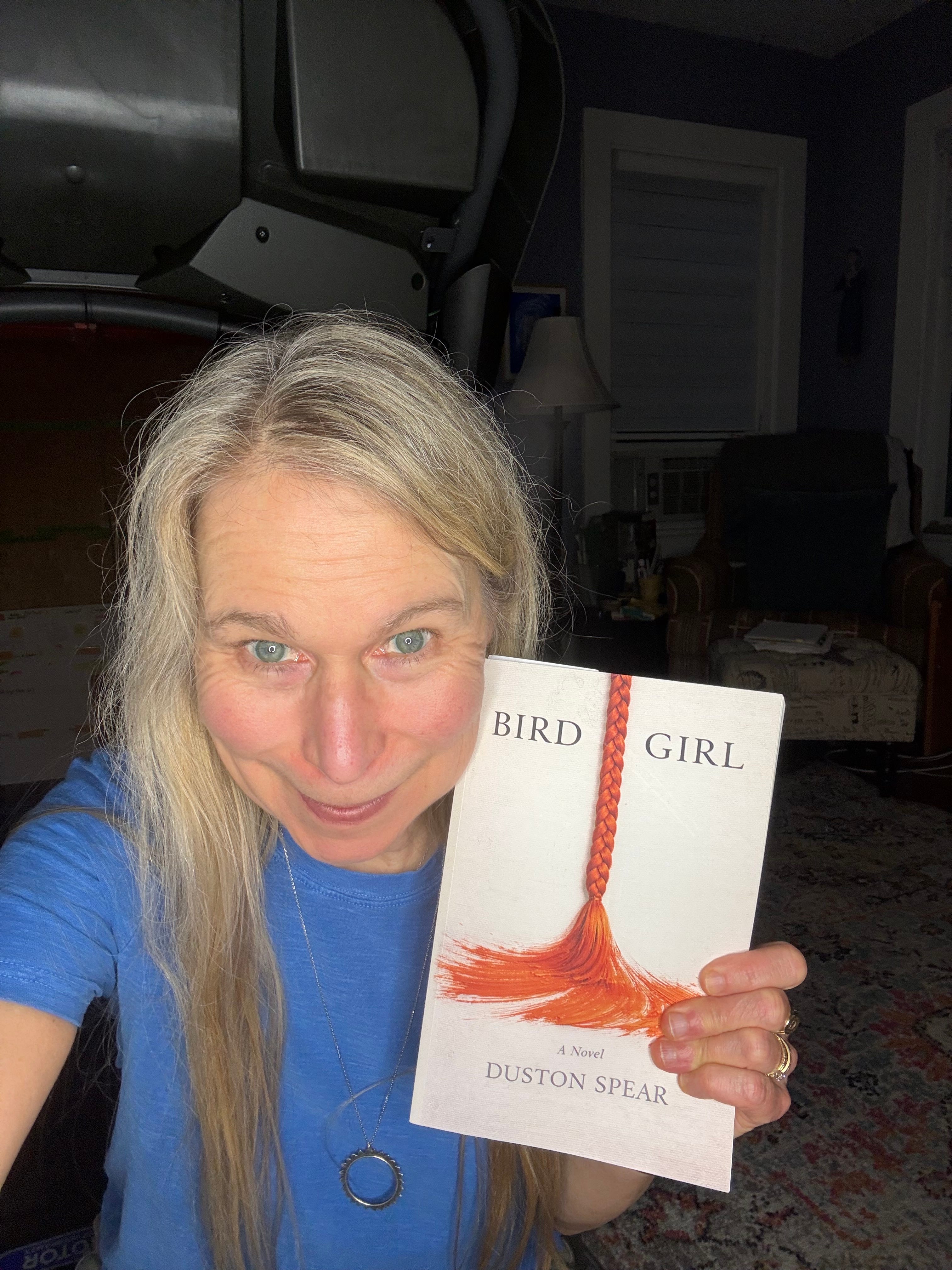
Bird Girl, Duston Spear. I’ve already written about this beautiful book, but wanted to give one more shout-out to this braided story about a Virginian artist making her way in the 1970s SoHo art scene, the ways gender constricts aspiring artists of all kinds, and the choice to be seen and heard, even if it takes one’s entire lifetime. This is a great example of a dual timeline narrative, the action deftly moving from the present to the past and back.
Update! I am no longer bereft, being halfway through Emily St. John Mandel’s The Singer’s Gun. Will report soon on that.
There are still a couple of spots in the November Kali Retreat, Nov 6-8. Come write with me in beautiful Northampton. We’ll eat delicious, healthy food, share our work with each other and talk books, of course.
Also, think about participating in 30 Poems in November, either as a writer or a supporter of a writer. This annual Poem-athon benefits Center for New Americans, an amazing organization that welcomes and serves immigrants, refugees, migrants, and asylum-seekers in Western Massachusetts. They offer free classes in English for Speakers of Other Languages (ESOL), career preparation assistance, support services and immigration legal services.
Thanks for reading, friends!
Love, Nerissa